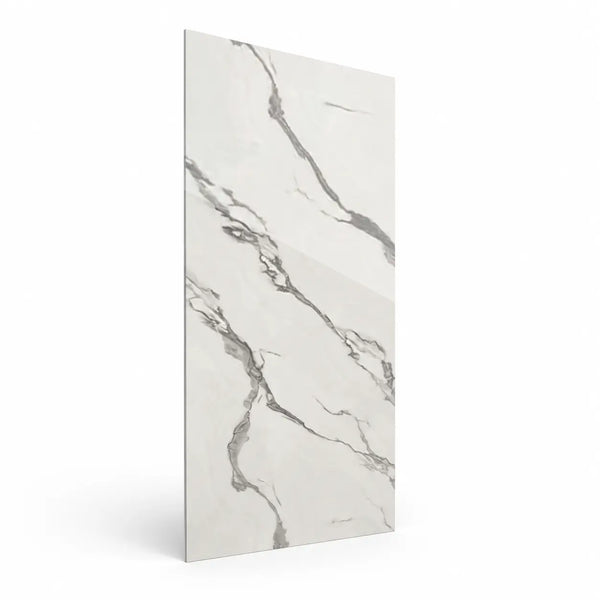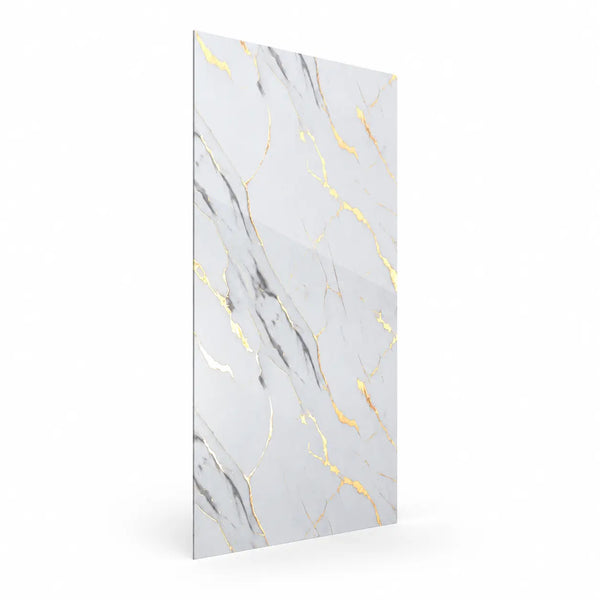
A bathroom may seem homogeneous, but its walls are not all exposed to the same amount of water. A panel placed behind a basin does not face the same stresses as a partition located under a shower jet. It is often in that location that buying a bathroom wall panel becomes risky: a mention such as “moisture resistant” is not sufficient to confirm compatibility with direct water contact.
The right choice therefore depends on the zone, the substrate, the ventilation and the installation method. The technical data sheet and the instructions for each reference must take precedence over the decorative photograph or a general promise. A panel suitable for ambient humidity can fail in a shower if its edges, joints or substrate are not designed for direct contact with water.
Identify the room and the real need
The same panel can be suitable behind a basin and fail in a shower. Before choosing a finish, observe the path of the water, the frequency of splashes and the actual condition of the wall. A family bathroom should be divided into three exposure zones, because each imposes different installation and compatibility constraints.
Three levels of exposure to distinguish
Ambient humidity corresponds to steam and condensation that circulate in the room. A decorative panel may be suitable if the substrate remains sound, if ventilation evacuates the humidity and if the instructions clearly allow this environment. On a cold or poorly ventilated wall, even a compatible covering can end up detaching.
Splashes concern the area around the basin, the bathtub and the grooming zone. The material must withstand splashing, but the joints, corners, cut-outs and edges must also be protected. A washable face does not automatically make the junctions between panels or around equipment watertight.
Direct contact with water concerns the interior of a shower and any partition exposed to a repeated jet. In areas directly sprayed, retain only a material intended for this use, with the required waterproofing system beneath the covering. Also check the limits of use, because a mention of “moisture resistant” may exclude direct water contact.
Practical rule: an indication of moisture resistance does not constitute authorization for installation in a shower. The instructions must specify the permitted use, substrate preparation and waterproofing conditions.
The scenario that reveals a wrong choice
A flexible adhesive panel can provide a neat finish behind a vanity unit, on a flat, dry and properly prepared wall. In a shower, water reaches the edges, cut-outs and junctions. Heat and humidity cycles can then weaken the adhesive or the substrate, even if the decorative surface appears intact.
The defect sometimes appears several weeks after installation. A damp wall, insufficient extraction or a poorly made joint promotes detachment, mold and substrate degradation. The purchase should therefore be decided according to the water zone, the product instructions, the ventilation and the installation system, rather than the decorative appearance alone.
Understand the market and the regulation
The wall panel market supports faster renovation, but its growth does not turn all walls into compatible surfaces. Market and development figures vary by source; do not infer a panel’s suitability from a commercial trend. Always consult the technical data sheet and the product instructions for bathroom compatibility.
Three water zones, three levels of requirement
A bathroom should be read by zones. In the dry zone, behind a vanity unit or on a wall with little exposure, a decorative panel may be suitable if the substrate is flat, dry and properly prepared. The splash zone, around a basin or near a bathtub, requires a reference designed for repeated splashes. The directly sprayed zone, in a shower, demands compatibility explicitly stated on the technical data sheet and the installation instructions.
The word “watertight” is not enough. It may concern the visible face of the panel without covering the edges, joints, cut-outs, pipe penetrations or the substrate. In a directly sprayed zone, water must be controlled by the whole system, with the waterproofing products and installation details required by the instructions.
What regulation changes on the construction site
The panel does not necessarily replace an adapted board, a waterproofing membrane or a protection under the covering when the configuration requires it. Mechanical ventilation (VMC) reduces condensation, but it does not fix a defective joint or an already damp wall. Old tile can receive certain panels if it remains stable, clean, dry and sufficiently flat. The solution avoids demolition while adding thickness and leaving an existing infiltration in place.
Before buying, therefore check the water zone, the exact reference, the condition of the substrate and the treatment of junctions. Ease of installation matters, but durability mainly depends on the stated compatibility and quality of workmanship.
Compare panel families
In a bathroom, a panel is not chosen only for its appearance. It must be linked to the water exposure zone and the model’s instructions. The low-exposure zone, such as a wall far from splashes, accepts more decorative solutions. The splash zone, around a basin or near a bathtub, requires a panel designed for repeated splashes. The directly sprayed zone, in a shower, demands explicitly indicated compatibility, with joints and cut-outs treated according to the specified system.
Panel families are therefore not interchangeable.
| Family | Moisture compatibility | Installation | Recommended use |
|---|---|---|---|
| Rigid PVC | To be checked according to the reference and the zone. Some systems are suitable for splashes or a directly sprayed zone if the data sheet and instructions allow it. | Adhesive, glue or screwing depending on the product. | Decorative partition, wall renovation and splash zones when compatibility is confirmed. |
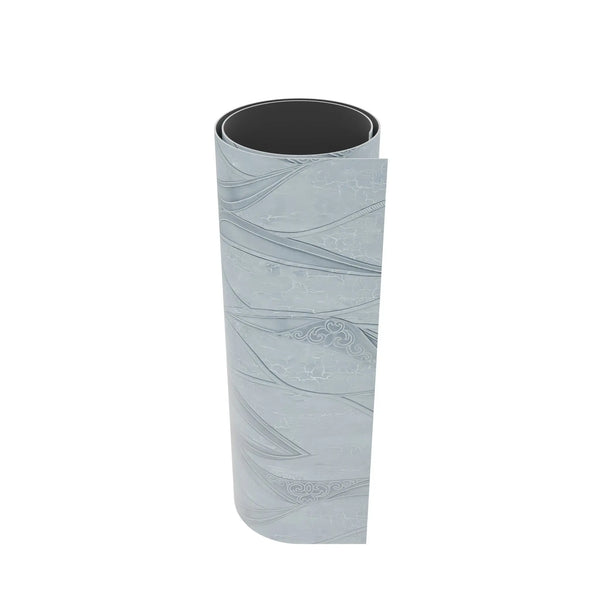
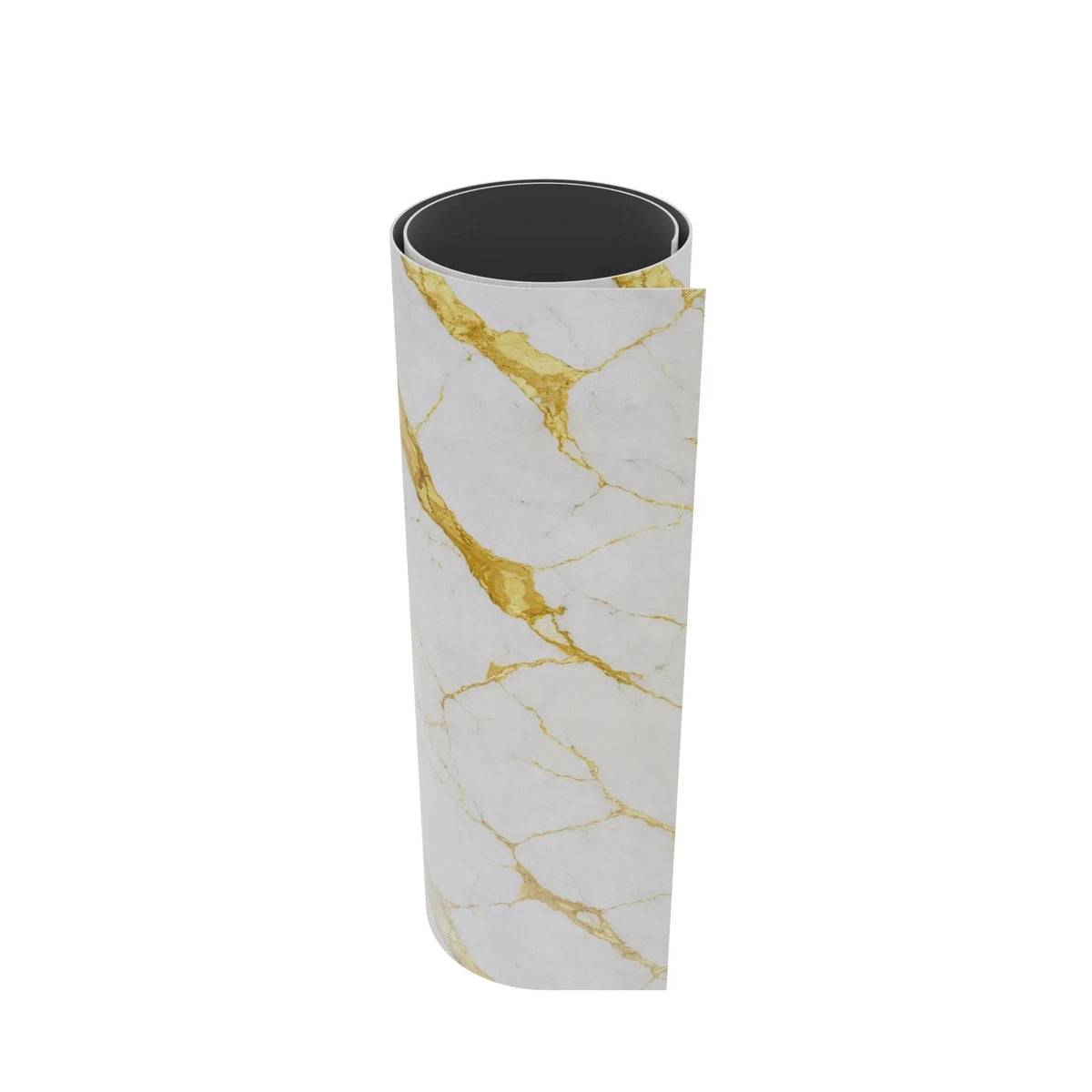
| Flexible adhesive panel | Suitable for ambient humidity and limited splashes according to the data sheet. To be excluded from showers and exposed zones. | Direct application on a clean, dry and smooth substrate. | Quick interior decoration away from direct water contact and away from a heat source. |
| Acoustic panel | Not a shower covering. Compatibility with a humid room must be checked for each reference. | Gluing or screwing depending on the specified system. | Reduction of echo and reverberation in a dry or protected zone. |
Rigid PVC for a decorative partition
Rigid PVC is suitable when a stable and easy-to-clean surface is sought. Its rigidity does not, however, prove its aptitude to receive water. In splash or sprayed zones, the junctions, the adhesive, the profiles and the treatment of cut-outs directly contribute to the overall performance.
Dimensions and thicknesses must be read on the data sheet of the chosen reference. A model can measure 250 × 120 cm and have a thickness of 3 mm. A lot or a packaging corresponds only to what is announced for the product. Do not transfer these characteristics from one model to another.
To compare finishes, substrates and uses, consult MPDiscount product sheets and the guides published on mpdiscount.com.
Flexible adhesive and acoustic
The flexible adhesive panel is installed on a smooth, clean and dry wall. A residue-free removal cannot be guaranteed, because the result depends on the adhesive, the substrate and the length of time it remains in place. This family remains reserved for low-exposure zones and must be excluded from showers, surfaces subjected to repeated splashes and proximity to a heat source.
An acoustic panel absorbs sound waves and reduces echo or reverberation. It does not, by itself, limit transmission of noise through a partition. Acoustic absorption reduces reflected sounds within the room, whereas sound insulation aims to limit their passage between two spaces. This difference prevents expecting partition-level performance from a decorative cladding.
Prepare the substrate and the ventilation
A high-performing panel does not fix a damp wall or insufficient ventilation. Before ordering, inspect the entire partition, including behind the previous covering if you notice detachment, a persistent smell or signs of infiltration. The diagnosis must distinguish three water exposure zones: the wall outside direct splashes, the splash zone and the directly sprayed partition. Check the instructions to confirm the panel’s real compatibility with the chosen zone.
Check the wall before measuring
Implementation requirements must be met before any cutting. The substrate must present a moisture content below 5% if the instructions require it. Then store the panel according to the duration and conditions indicated by the chosen reference’s instructions; these values (duration, temperature and storage humidity) vary by product and are provided here as examples only. Always check the technical data sheet or the instructions for the exact reference before installation.
Check each point:
- Flat and stable, without friable parts, significant hollows or old covering that detaches.
- Clean and degreased, to allow the glue or adhesive to bond correctly.
- Dry, notably in corners, near the floor and around previous repairs.
- Compatible with the water zone, in accordance with the instructions and the required protection.
In heavily exposed zones, a waterproof substrate is often still necessary. Depending on the configuration, the product instructions may recommend laying a waterproofing membrane or other protections before the cladding. The panel must not be used to hide an infiltration or a degraded substrate.
Manage condensation and storage
Ventilation evacuates the steam produced by the shower and limits condensation on cold surfaces. It does not make a decorative panel watertight and does not replace the treatment of junctions. If the room remains humid long after use, correct this problem before installation.
Storing flat or according to the instructions also prevents deformations before installation. Quantity calculation must include cut-outs, corners and junctions. Use the MPDiscount wall surface calculation guide available on mpdiscount.com to prepare measurements, then apply the overlap and waste rules indicated by the product.
Choose the appropriate fixing
The fixing depends on the panel and the exposure zone:
- Adhesive, for a reference designed with a self-adhesive face and a regular, clean and dry substrate.
- Gluing, with the glue recommended for the material and the environment. Respect the curing time and compatibility with the substrate.
- Screwing, when the system provides for mechanical fixing. Fixing points, profiles and penetrations must be protected against water ingress.
A mechanically secure fixing does not guarantee the partition’s watertightness. Peripheral joints and junctions must follow the chosen system, especially in directly exposed zones.
Applications and choice by room
The choice becomes clearer when each zone receives a specific function. A wall located outside direct splashes can accommodate a decorative panel whose sheet allows ambient humidity. A wall close to a basin requires more vigilance regarding edges and splashes. A shower requires a reference explicitly designed for water, with installation and waterproofing conforming to the instructions.
Outside direct splashes
In a zone behind a unit, near a mirror or on a wall with little exposure, a decorative panel can quickly transform the room. A flexible adhesive model may be suitable if the substrate is smooth, dry and without a nearby heat source. The installation must remain careful, because wall defects can appear through a flexible material.
Acoustic panels are more appropriate in a dry zone, for example on a wall far from splashes. Their role is to absorb some of the sound waves, not to protect the partition from a water jet.
Near a basin or a bathtub
In a splash zone, a rigid PVC may be considered when the data sheet indicates this compatibility. Junctions must remain accessible for inspection and be protected with the recommended product. A too-tight cut around a tap or shelf creates a weakness that the panel itself does not correct.
Joints age faster when they remain damp permanently. Gentle cleaning, drying splashes and monitoring corners prevent a small defect from becoming an infiltration.
In the shower
A flexible adhesive panel must not be placed in a shower, in a directly exposed humid zone or near a heat source. For a rigid panel, authorization must never be deduced from the word “PVC” alone. The reference’s data sheet must confirm the use, the substrate, the glue, the profiles and the waterproofing conditions.
Black aesthetics and maintenance
Black draws the eye, structures a room and can strengthen contrast with a light furniture, metallic fittings or bright tiles. A matte black panel often gives a more discreet result than a glossy surface, while a glossy finish accentuates light but makes watermarks more visible.
The choice must include the cleaning frequency. On a dark surface, limescale deposits and soap residues become noticeable quickly, especially around a basin or a shower. Regular wiping with a soft cloth limits marks without attacking the finish.
Black, joints and junctions
A large black surface can visually reduce breaks if junctions are well aligned. It can also emphasize every cutting defect, every irregular joint and every silicone mark. Angles and junctions must therefore be planned before cutting, notably when a panel replaces old tile.
The absence of visible joints can reduce areas where moisture and limescale accumulate, but it does not eliminate technical junctions. Edges, penetrations and the connection with the shower tray remain to be treated according to the instructions.
Clean without damaging
Routine cleaning should remain gentle. Soapy water suitable for the surface and a non-abrasive cloth are generally appropriate for surfaces compatible with this maintenance. Scouring powders, abrasive sponges and products containing acetone can scratch or alter the finish.
The aesthetic choice must therefore not be separated from daily life. A black finish suits a buyer willing to wipe splashes regularly and check the joints.
Checks before purchase and next steps
Before adding a bathroom wall panel to the cart, the buyer must verify the actual installation zone rather than the room name alone. A bathroom is not a general authorization for humid use.
The checklist to keep
- Exposure zone, distinguish ambient humidity, splashes and direct water contact.
- Reference compatibility, check the data sheet and the instructions, without assuming that all panels are watertight or suitable for the shower.
- Substrate, check flatness, cleanliness, dryness and stability of the old covering.
- Ventilation, ensure condensation is properly evacuated.
- Fixing, identify whether installation is by adhesive, glue or screwing.
- Joints and edges, check profiles, junctions, corners and the connection with sanitary equipment.
- Dimensions, do not transpose dimensions, thickness or packaging from one reference to another without checking the product sheet.
- Maintenance, check authorized products and the finish’s sensitivity to scratches or limescale.
Decide without confusing the uses
For a wall outside splashes, the choice can favor aesthetics and ease of installation. For a zone near a basin, resistance to splashes and the quality of junctions become priorities. For a shower, only a reference explicitly designed for that exposure should be retained, with underlying waterproofing provided according to the configuration.
If a product sheet does not answer the question of the water zone, the glue or the substrate, the purchase should be suspended until reliable technical information is obtained. This caution is less costly than premature removal or wall repair after infiltration.
MPDiscount offers decorative acoustic panels, decorative wall coverings, mirrors and installation accessories for interior design projects. To compare available references and check their characteristics before purchase, consult MPDiscount and the corresponding product sheets on MPDiscount.
Note on the cover photo: the previous cover photo showed panels installed behind a basin (splash zone) while the listed product sheets explicitly state “Reserved for dry interior decoration: living room wall, bedroom or decorative space away from water splashes. To be avoided in the shower, wet areas and near heat sources.” This image may suggest that these adhesive models are suitable near a basin whereas their product sheets reserve them for zones away from water splashes.